When Is an Elevation Certificate Required?
You find a home that looks perfect. The price is right, the location feels great, and the property checks all your boxes. Then someone asks, “Do you have an elevation certificate?” Suddenly, a document you may have never heard of becomes important.
Many property owners do not think about elevation certificates until they run into flood insurance questions, permit requirements, or construction plans. By that point, delays can happen if the information is not available.
If you own property, plan to buy land, or are preparing for construction, understanding when an elevation certificate is needed can save time and help avoid surprises.
What Is an Elevation Certificate?
An elevation certificate is a document that records a building’s elevation compared to flood levels shown on FEMA flood maps. It helps determine flood risk and supports insurance and floodplain requirements.
This document is usually completed by a licensed land surveyor, engineer, or architect. It includes measurements and details about the structure and property location.
An elevation certificate often contains:
- Lowest floor elevation
- Flood zone information
- Base Flood Elevation data
- Building location details
- FEMA map information
- Photos of the structure
- Professional certification
The information helps insurance companies, lenders, and local officials better understand the property’s flood risk.
When Do You Need an Elevation Certificate?
You may need an elevation certificate when buying property in a flood area, applying for flood insurance, or planning work on a structure in a floodplain.
Not every property requires one. However, several situations commonly lead to the need for this document.
Buying Property Near Flood Zones
Many buyers focus on home inspections and financing, but flood risk can create unexpected costs. If a property sits in or near a flood hazard area, lenders or insurance companies may request elevation information.
Having an elevation certificate early can help buyers understand potential insurance costs before closing.
This becomes especially useful for properties near streams, creeks, or low-lying areas around Oxford and nearby communities.
Applying for Flood Insurance
Flood insurance companies often use elevation information to understand a property’s level of risk.
A building that sits above expected flood levels may qualify for different insurance considerations compared to a structure that sits lower.
An elevation certificate provides measurements that help support these decisions.
Some homeowners discover that having updated elevation information prevents confusion during the insurance process.
Building or Improving a Structure
Oxford follows floodplain management rules for construction in certain areas. If you plan to build a new structure or make major improvements, elevation records may be required during permitting.
Projects may include:
- New homes
- Additions
- Garages
- Major renovations
- Building improvements
- Certain site development projects
If the work affects structures inside regulated flood areas, elevation documentation can become part of the permit process.
Planning early can help prevent delays after construction begins.
What Information Does a Surveyor Collect?
Many people assume an elevation certificate only measures height. In reality, several pieces of information are gathered.
During the process, survey professionals may document:
- Ground elevation around the structure
- Lowest finished floor level
- Building characteristics
- Flood map information
- Utility details
- Photographs
- Geographic location data
Accurate measurements matter because even small differences can affect flood-related decisions.
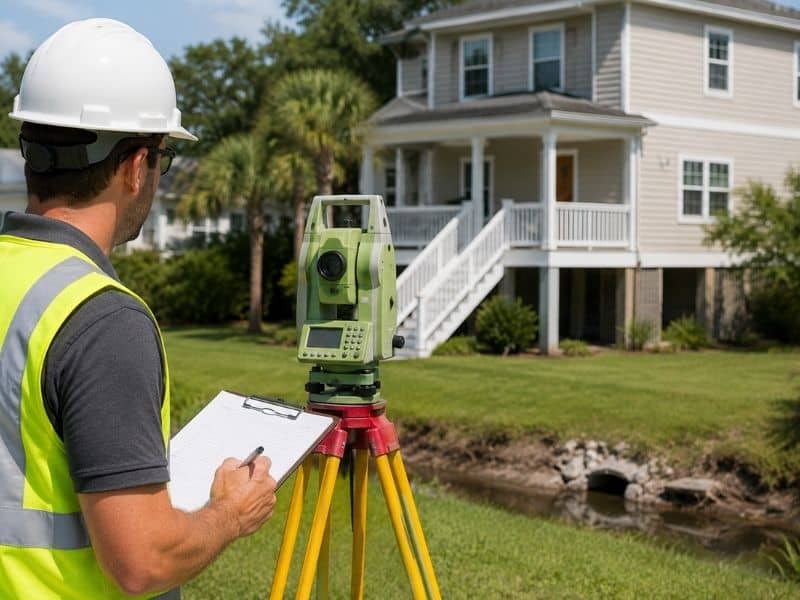
Professional equipment helps ensure the information is recorded correctly.
Can an Older Elevation Certificate Still Be Used?
Sometimes yes, but not always.
Older certificates may still be acceptable if no major property changes have occurred and local requirements remain the same. However, several things can affect whether an older document is useful:
- Building additions
- Renovations
- Updated FEMA mapping
- Site grading changes
- Floodplain updates
Property owners sometimes assume an older certificate will always work, only to learn updated information is needed later.
If there is uncertainty, checking before starting a project can prevent extra work.
Why Waiting Can Create Problems
Many people do not realize they need an elevation certificate until they are already under deadlines.
A buyer may be close to closing. A contractor may already be scheduled. Insurance paperwork may already be underway.
At that point, everyone is waiting on elevation information.
Getting answers early helps avoid last-minute stress. It also gives property owners time to understand how flood requirements may affect future plans.
For owners planning projects, preparation often makes the process much easier.
Frequently Asked Questions
Who can prepare an elevation certificate?
A licensed land surveyor, engineer, or architect may prepare an elevation certificate depending on state requirements.
Does every home need an elevation certificate?
No. Many properties never need one. Requirements often depend on flood zones, insurance needs, and construction activity.
Can an elevation certificate reduce flood insurance costs?
In some cases, elevation information may help support more accurate flood risk assessments.
How long does it take to complete an elevation certificate?
Timing varies depending on property conditions, project demand, and scheduling availability.
Is an elevation certificate the same as a land survey?
No. An elevation certificate focuses on flood-related elevation information, while land surveys may address boundaries, improvements, or other property details.
