
Why a Topographic Survey Matters
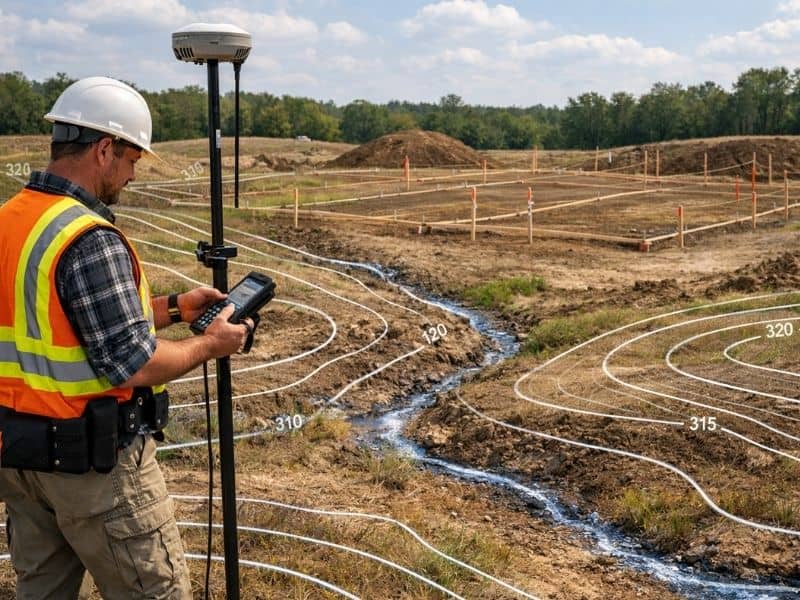
Imagine buying land, hiring a designer, and getting excited about a future project, only to discover later that the property slopes toward a drainage area or has elevation changes nobody noticed. That kind of surprise can lead to redesign costs, delays, and construction problems.
Many people focus on the building itself and forget one important step. Before any design work begins, the land needs to be understood first. That is where a topographic survey becomes valuable.
A topographic survey provides a detailed picture of the property’s surface conditions. It helps architects, engineers, and property owners understand how the land behaves before creating plans.
What Is a Topographic Survey?
A topographic survey is a detailed map that records both natural and man-made features on a property. It shows how the land rises, falls, and changes across the site.
Unlike surveys that focus mainly on property boundaries, a topographic survey gathers information about the shape and condition of the land itself.
Common items shown on a topographic survey include:
- Ground elevations
- Slopes and contours
- Trees and landscaping features
- Buildings and structures
- Sidewalks and driveways
- Drainage areas
- Utility features visible above ground
- Fences and retaining walls
Surveyors collect measurements in the field using advanced equipment and software. The finished survey becomes a working guide for design professionals before planning starts.
Why Is a Topographic Survey Needed Before Site Design?
A topographic survey is often one of the first steps before creating site plans because land conditions directly affect the design process.
A property may appear flat when viewed from the road. Once measurements are collected, small elevation changes may reveal drainage concerns or construction challenges.
Design teams rely on this information to make informed decisions early.
A topographic survey helps:
- Determine proper building placement
- Support grading plans
- Identify drainage patterns
- Plan driveways and access routes
- Reduce design revisions
- Improve permit submissions
Without accurate site information, design decisions can become educated guesses. Guesswork usually creates problems later.
Understanding Contour Lines and Elevation Data
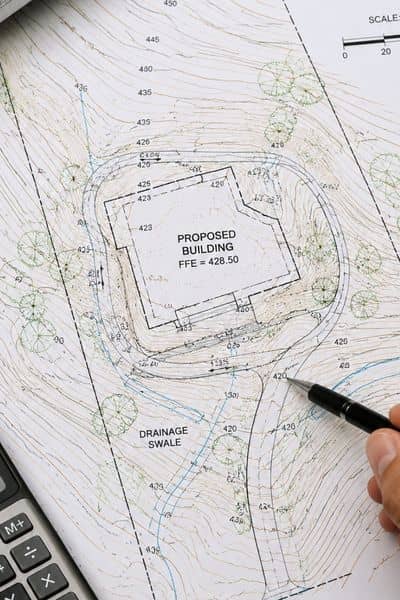
One of the most important parts of a topographic survey is the use of contour lines.
Contour lines connect areas that share the same elevation. They help create a visual picture of how the land changes from one point to another.
According to the United States Geological Survey, contour lines are a standard method used to represent land shape and elevation on maps. Closely spaced contour lines usually indicate steeper ground, while wider spacing suggests flatter terrain.
These details may seem small, but they play a major role during planning.
For example, a steep section of land could affect:
- Foundation design
- Water runoff direction
- Drainage systems
- Vehicle access
- Landscaping layouts
Understanding elevation early can prevent expensive corrections later.
Who Uses Topographic Surveys?
Many people assume topographic surveys are only for large developments. In reality, they are useful for projects of many sizes.
Professionals who commonly use them include:
Architects
Architects use site information to design structures that fit the property’s shape and conditions.
Engineers
Engineers rely on elevation data when planning grading, drainage, and infrastructure improvements.
Developers
Developers often need a complete understanding of the land before evaluating project feasibility.
Property Owners
Homeowners planning additions, detached buildings, or major outdoor projects may also benefit from topographic information.
The larger or more complex the property becomes, the more valuable accurate land data can be.
What Can Happen Without a Topographic Survey?
Skipping early site analysis may save time at first, but problems often appear later.
Construction crews sometimes discover unexpected elevation changes after plans are already complete. When this happens, design modifications may be needed.
Potential issues can include:
- Drainage problems
- Standing water around structures
- Unexpected grading costs
- Poor driveway slopes
- Permit delays
- Construction adjustments
Fixing problems during construction is often more expensive than identifying them before design begins.
Good planning starts with reliable information.
When Should You Order a Topographic Survey?
A topographic survey works best when completed early in the planning process.
Property owners often order one before:
- Designing a new structure
- Planning land improvements
- Preparing development plans
- Creating drainage solutions
- Designing parking areas
- Starting larger construction projects
Waiting too long can create delays if designers must stop work and request additional field information.
Starting with accurate site data helps projects move forward with fewer surprises.
